产品讨论Product Discussions
一篇关于如何开产品讨论会的笔记:区分事实判断与价值判断,想清楚哪些讨论值得花时间。Notes on how to run product discussions: separating factual judgments from value judgments and deciding which debates are worth the time.
Here, we discuss how to hold product strategy and design discussions, or, put more concretely, how to run a meeting.
What Are We Actually Doing When We Discuss?#
The goal of discussion is to reach conclusions and make judgments. When making judgments, we should integrate facts and values. At ICBU, PDs responsible for product logic and interaction design should focus on factual judgment, and balance value judgments based on factual reasoning.
What Is a Factual Judgment?#
-
Any decision related to achieving the final goal is a factual judgment.
- For example, when optimizing the last frame of a product image to improve user engagement, our choice of optimization method directly affects user perception. This is a factual judgment.
-
We can verify factual judgments by asking: “Does our judgment align with reality?” In fact, this is almost the only way to validate factual judgments.
What Is a Value Judgment?#
-
Decisions that guide the choice of ultimate goals are value judgments.
- For PDs in charge of product logic and design, large-scale value judgments include choosing between D-O and D-AB; smaller ones include deciding whether semi-managed fulfillment should first support “per-box” selling.
-
Because value judgments often involve moral or cultural factors (e.g., “users prefer A over B because of cultural background”), it’s difficult to quantify or compare them precisely through data.
Which Discussions Should Happen Immediately?#
Given the nature of factual and value judgments:
-
We shouldn’t overanalyze or attempt to quantify which value judgment is better. Value judgments should be decided quickly and then verified.
-
We should focus discussions on the assumptions or premises underlying factual judgments:
- When assumptions or premises are validated (or have high-confidence evidence), make factual judgments logically based on them.
- When assumptions or premises are not validated, verify them as soon as possible.
Therefore:
-
The user flow and fulfillment capabilities must be discussed first and clearly understood (e.g., whether “per-box” selling should be the core model).
-
Purely logical product designs or details should be judged by logic (e.g., economic shipping should be cheaper than standard shipping).
-
Design details related to conversion rate (e.g., whether the SKU panel should be full screen) are hard to discuss meaningfully.
- PDs can qualitatively discuss user preferences but can’t precisely quantify the impact of such designs across user segments.
- Thus, these design decisions should be continuously tested via A/B experiments to validate assumptions.
In short: discussions on design details have low ROI. Once logic paths are unblocked, quickly A/B test to reach irrefutable conclusions.
What Are the Standards?#
- Use precise language to clearly define the problem to be studied. Only then can we accurately measure the intended outcomes.
- Only through specific descriptions can we identify concrete user scenarios linked to the problem or goal.
- “Reconstructing and hypothesizing usage scenarios” requires accurate language describing user behavior, and these behavioral expectations are the foundation of all discussion.
What Should a Product Manager Do?#
Establish Clear and Precise Conceptual Understanding#
-
From both factual and value perspectives, build a clear understanding of the problem or pain point:
- What type of users encounter this issue, under what circumstances, and how does it hinder their goals?
- What type of users would be interested in this new capability, and how would it help them achieve their goals?
Build Precise Vocabulary and Analytical Methods#
- Define accurate and shareable terminology to describe problems and pain points, ensuring discussions remain faithful to the original meaning.
- Define universally acceptable analytical methods that closely align with user behaviors, so that proposed solutions can be discussed and evaluated within the same framework.
Focus on Current Decisions and Anticipate Future Impacts#
-
Focus on problems and the product itself, not on unrelated or weakly related decisions.
-
Evaluate the long-term effects of decisions; consider how a choice impacts future goals.
- For instance, when recruiting products for semi-managed fulfillment, attention should be paid to category quality, not just quantity.
Why Write This Much?#
If our problem definitions and methodological descriptions do not reach a higher level of critical thinking, we cannot expect to make rapid progress in distinguishing and validating correct product principles and methods.
在这里,我们讨论如何进行产品策略与产品设计的讨论,或者说得更具体些,如何开好一场会。
讨论的时候,我们到底在做什么?#
讨论的目标是得出结论、做出判断。做判断时,我们应当把事实与价值结合起来。在 ICBU,负责产品逻辑与交互设计的 PD 应当聚焦于事实判断,并在事实推理的基础上权衡价值判断。
什么是事实判断?#
-
一切与达成最终目标相关的决策,都是事实判断。
- 例如,为了提升用户互动而优化商品图片的最后一帧时,我们对优化方式的选择会直接影响用户感知。这就是事实判断。
-
我们可以通过一个问题来检验事实判断:「我们的判断与现实相符吗?」事实上,这几乎是验证事实判断的唯一方式。
什么是价值判断?#
-
指引最终目标选择的决策,是价值判断。
- 对负责产品逻辑与设计的 PD 来说,大的价值判断包括在 D-O 和 D-AB 之间做选择;小一些的包括决定半托管履约是否要先支持「按箱」售卖。
-
由于价值判断往往涉及道德或文化因素(例如「出于文化背景,用户更喜欢 A 而不是 B」),我们很难通过数据对其做精确的量化或比较。
哪些讨论应该立刻进行?#
基于事实判断和价值判断的性质:
-
我们不应该过度分析、也不应该试图量化哪个价值判断更好。价值判断应当快速拍板,然后去验证。
-
我们应该把讨论聚焦在事实判断背后的假设或前提上:
- 当假设或前提已被验证(或已有高置信度的证据)时,以其为基础按逻辑做出事实判断。
- 当假设或前提尚未被验证时,尽快去验证它们。
因此:
-
用户流程与履约能力必须最先讨论并理解清楚(例如「按箱」售卖是否应该是核心模式)。
-
纯逻辑性的产品设计或细节应当靠逻辑来判断(例如经济物流应该比标准物流便宜)。
-
与转化率相关的设计细节(例如 SKU 面板是否要全屏)很难讨论出有意义的结果。
- PD 可以定性地讨论用户偏好,但无法精确量化这类设计对不同用户分群的影响。
- 因此,这类设计决策应当通过 A/B 实验持续测试,以验证假设。
简而言之:讨论设计细节的 ROI 很低。一旦逻辑链路打通了,就快速做 A/B 实验,得出无可辩驳的结论。
标准是什么?#
- 用精确的语言清晰定义要研究的问题。只有这样,我们才能准确度量想要达成的结果。
- 只有通过具体的描述,我们才能识别出与问题或目标相关联的具体用户场景。
- 「重构并假设使用场景」需要用准确的语言描述用户行为,而这些对行为的预期是一切讨论的基础。
产品经理应该做什么?#
建立清晰而精确的概念性认知#
-
从事实和价值两个视角,对问题或痛点建立清晰的认知:
- 什么类型的用户、在什么情境下会遇到这个问题?它如何阻碍了他们达成目标?
- 什么类型的用户会对这个新能力感兴趣?它将如何帮助他们达成目标?
建立精确的词汇与分析方法#
- 定义准确且可共享的术语来描述问题和痛点,确保讨论不偏离原意。
- 定义大家普遍认可的分析方法,并使其紧贴用户行为,这样各方提出的方案才能在同一个框架内讨论和评估。
聚焦当下决策,预判未来影响#
-
聚焦于问题和产品本身,而不是无关或弱相关的决策。
-
评估决策的长期效应;考虑一个选择会如何影响未来的目标。
- 例如,为半托管履约招商选品时,应当关注类目质量,而不只是数量。
为什么要写这么多?#
如果我们的问题定义与方法论描述达不到更高层次的批判性思考,就不能指望在甄别和验证正确的产品原则与方法上取得快速进展。
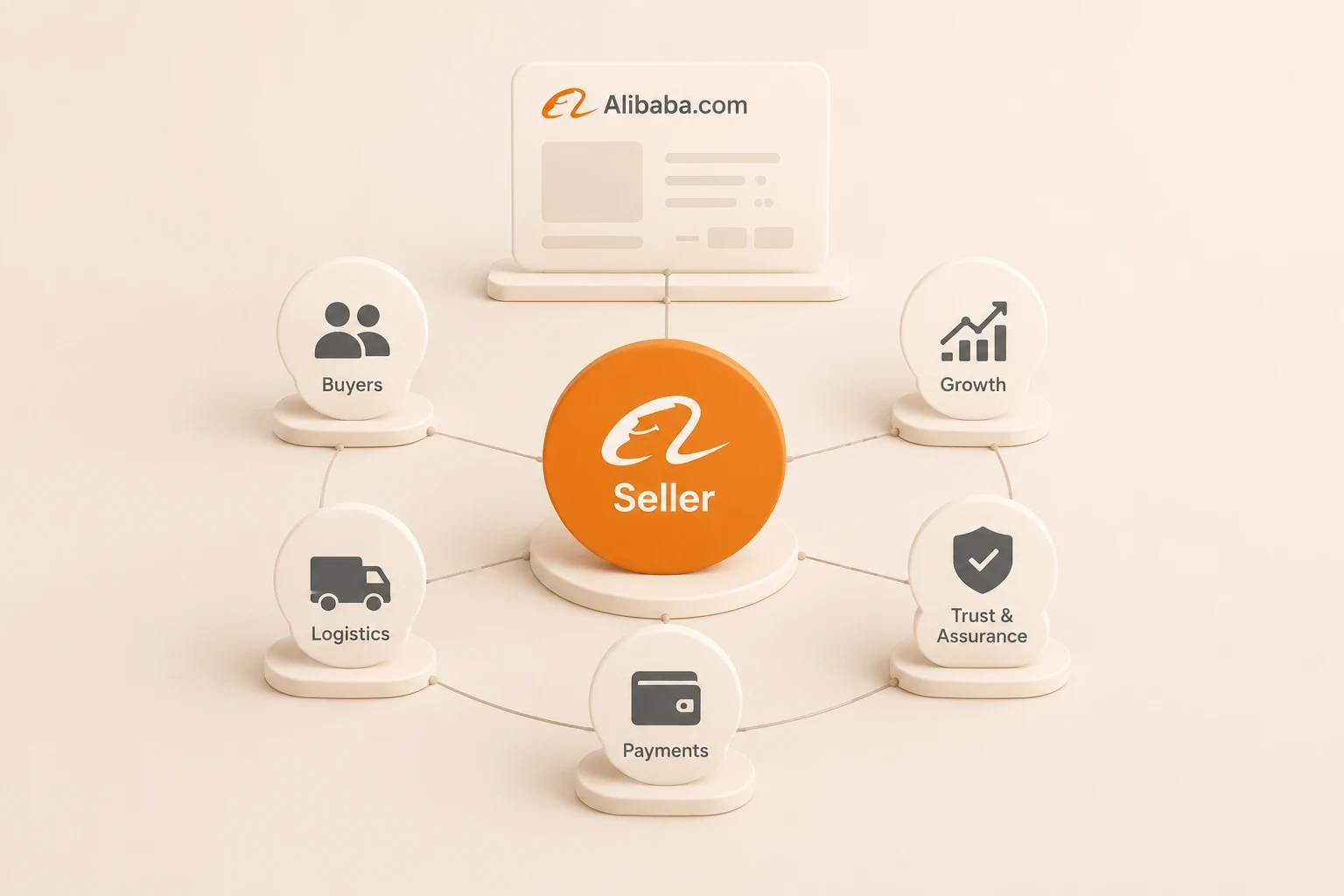
Alibaba.com 卖家生态与决策观察Alibaba.com Seller Ecosystem and Decision-Making Observation
基于深圳和义乌12家卖家访谈的观察:流量成本如何主导卖家决策,以及三类典型卖家画像。Observations from interviews with 12 Alibaba.com sellers in Shenzhen and Yiwu: how traffic costs drive seller decisions, plus a three-type seller taxonomy.
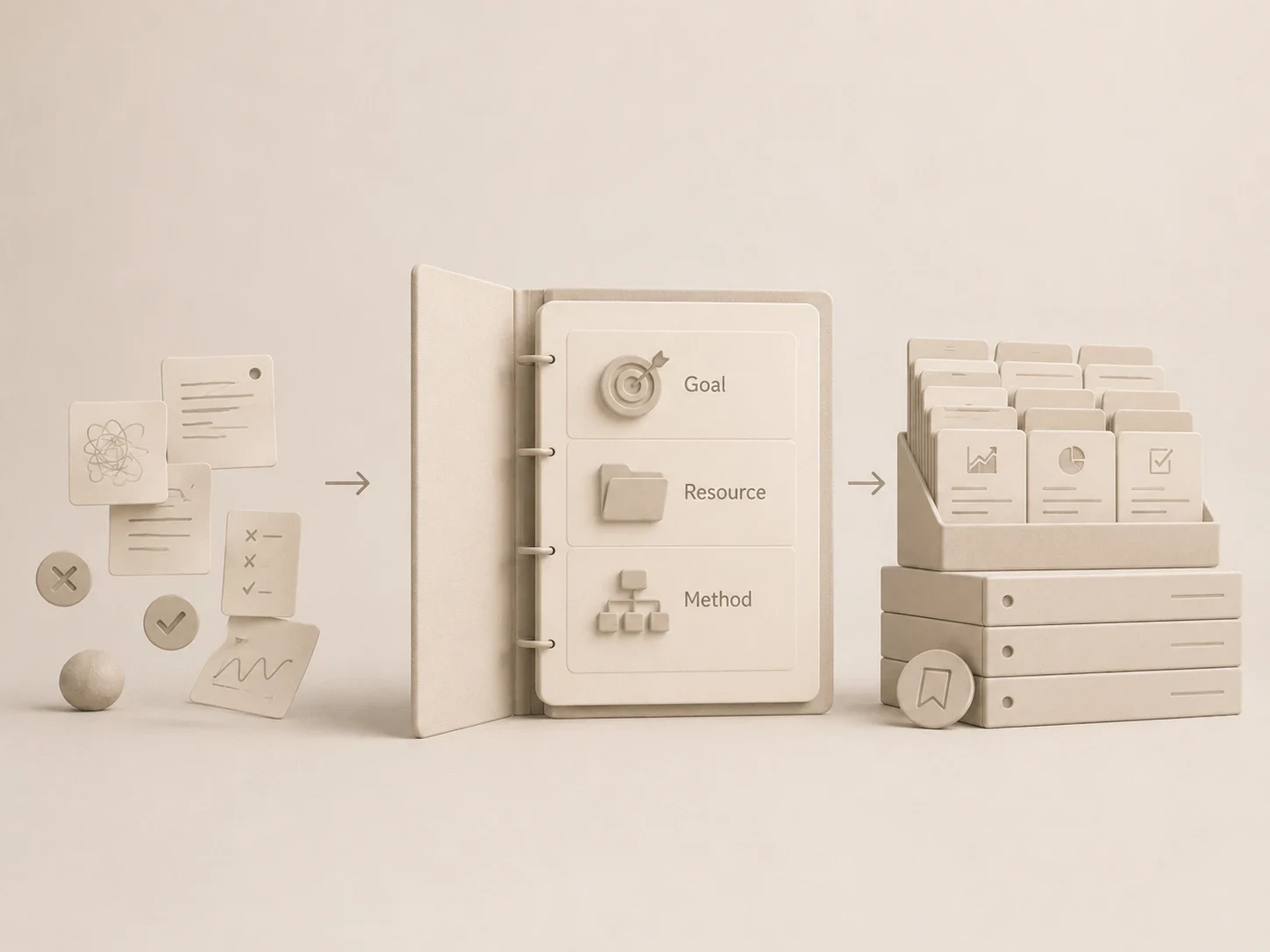
产品方法论体系化手册Product Methodology Systemization Playbook
一份产品方法论体系化手册:把失败和成功都记录下来,让决策依靠证据而不是记忆。A playbook for systemizing product methodology: recording failures and successes so decisions rest on evidence instead of memory.

轻定制中能力与产品妥协的平衡Balancing Capability and Product Compromise in Light Customization
讨论Alibaba.com轻定制项目如何在能力妥协与产品妥协之间取舍:以「全交易化」为方向的指导原则。How the Alibaba.com Light Customization project should balance capability limits against product compromise, with full transactionalization as the guiding principle.
Comments